

Turning perception into precision
Simplify sensory analysis management with ACCEPT, the sensory analysis software that organises panels, tests, and data for more informed decisions in food quality control.
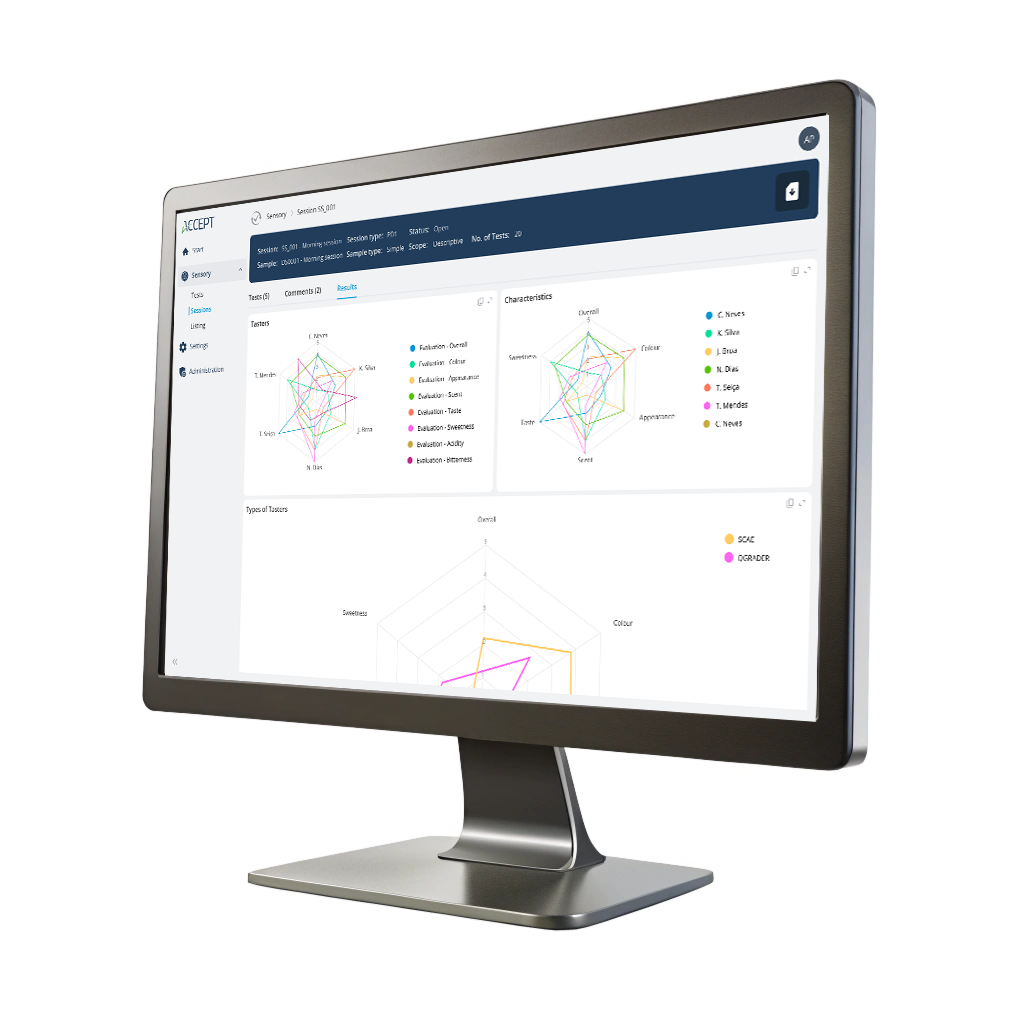
Sensory tests tailored to your product
- Support for descriptive, quantitative, triangular,
duo‑trio, and comparative tests. - Customizable methodologies tailored to your panel, product, and assessment goals.
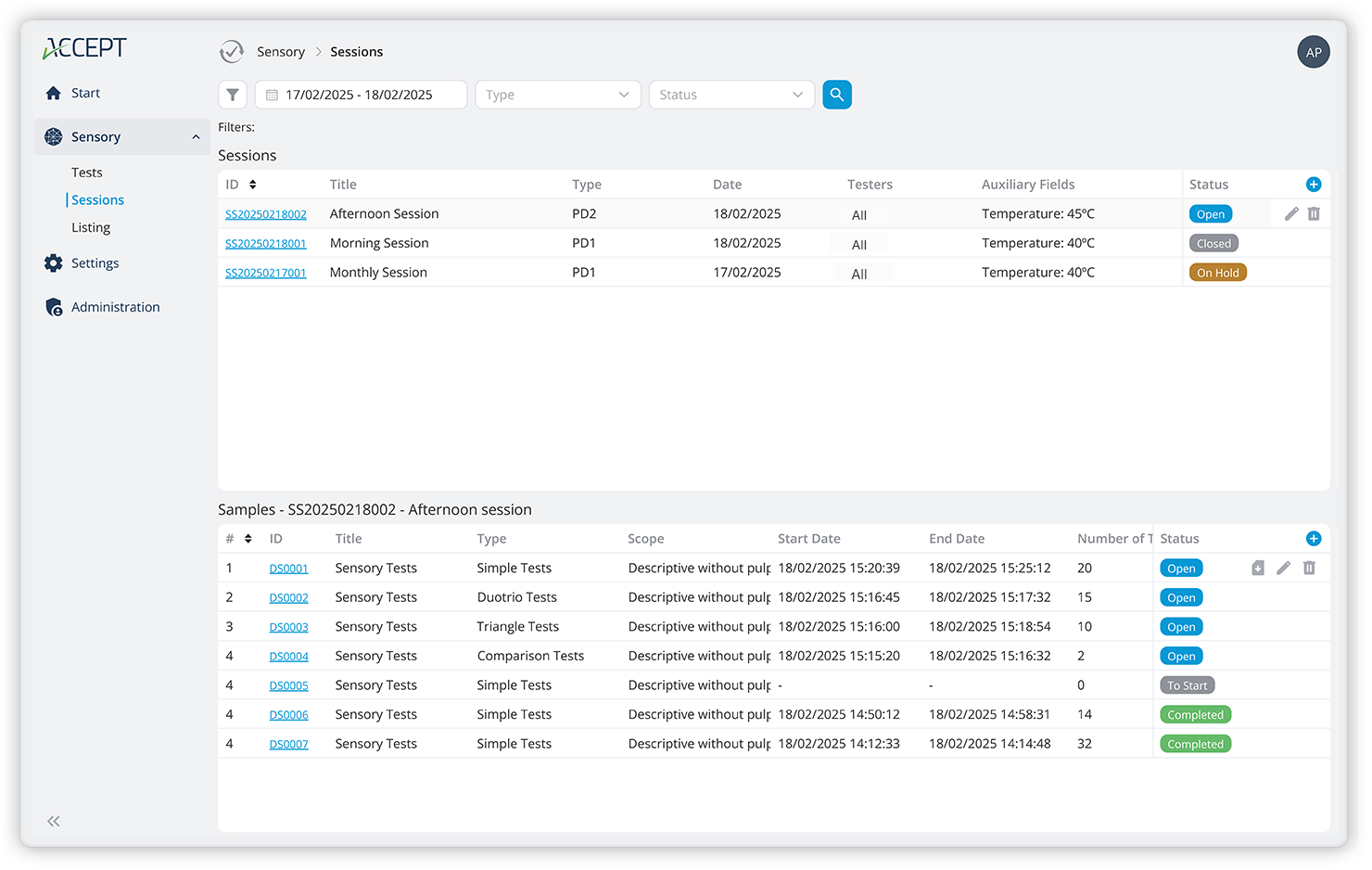
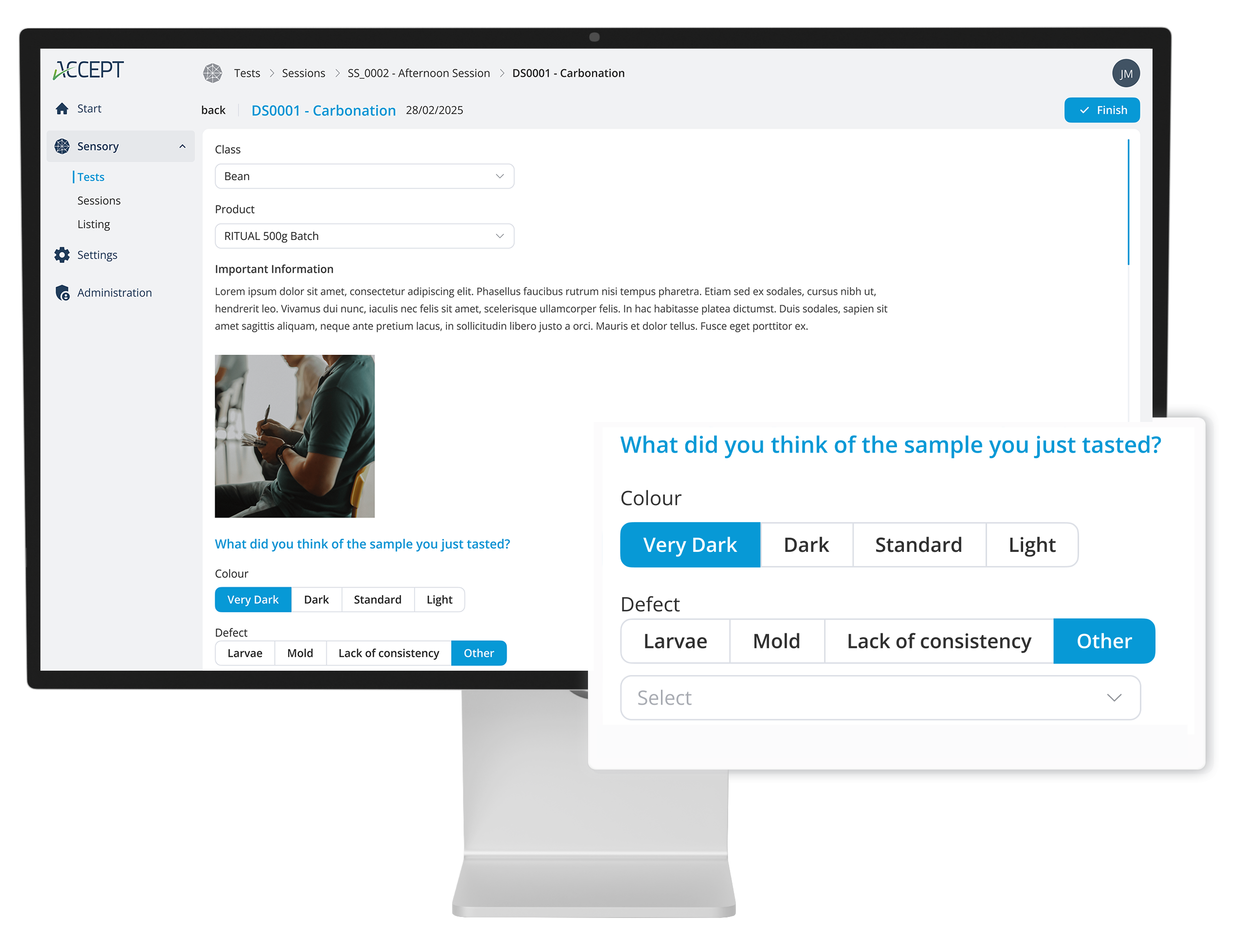
Easy, structured registration for every tester
- A portal that lets every panelist log evaluations accurately and without duplication.
- Structured data collection that facilitates analysis, comparison, and validation of results.
Analyses that turn perceptions into decisions
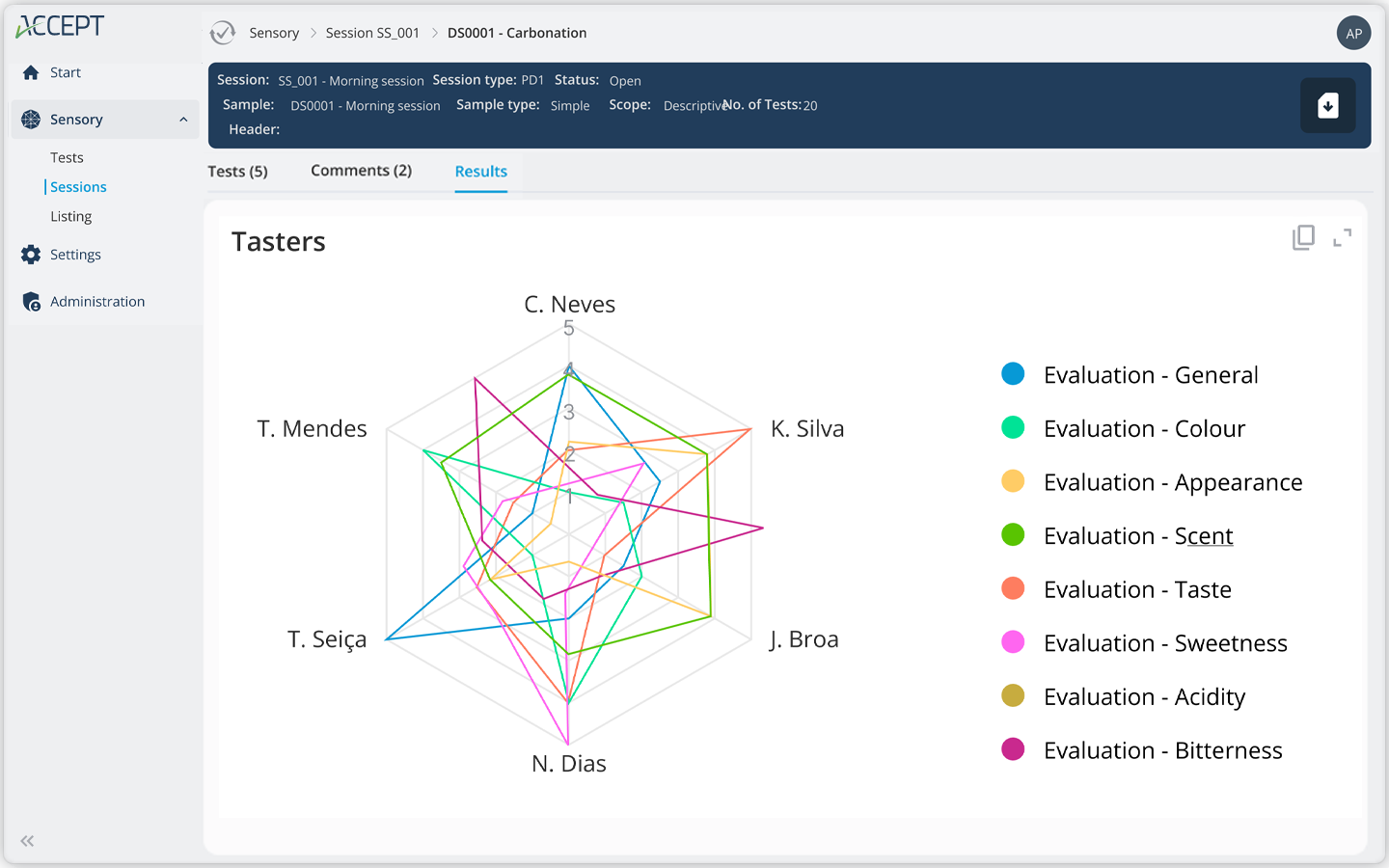
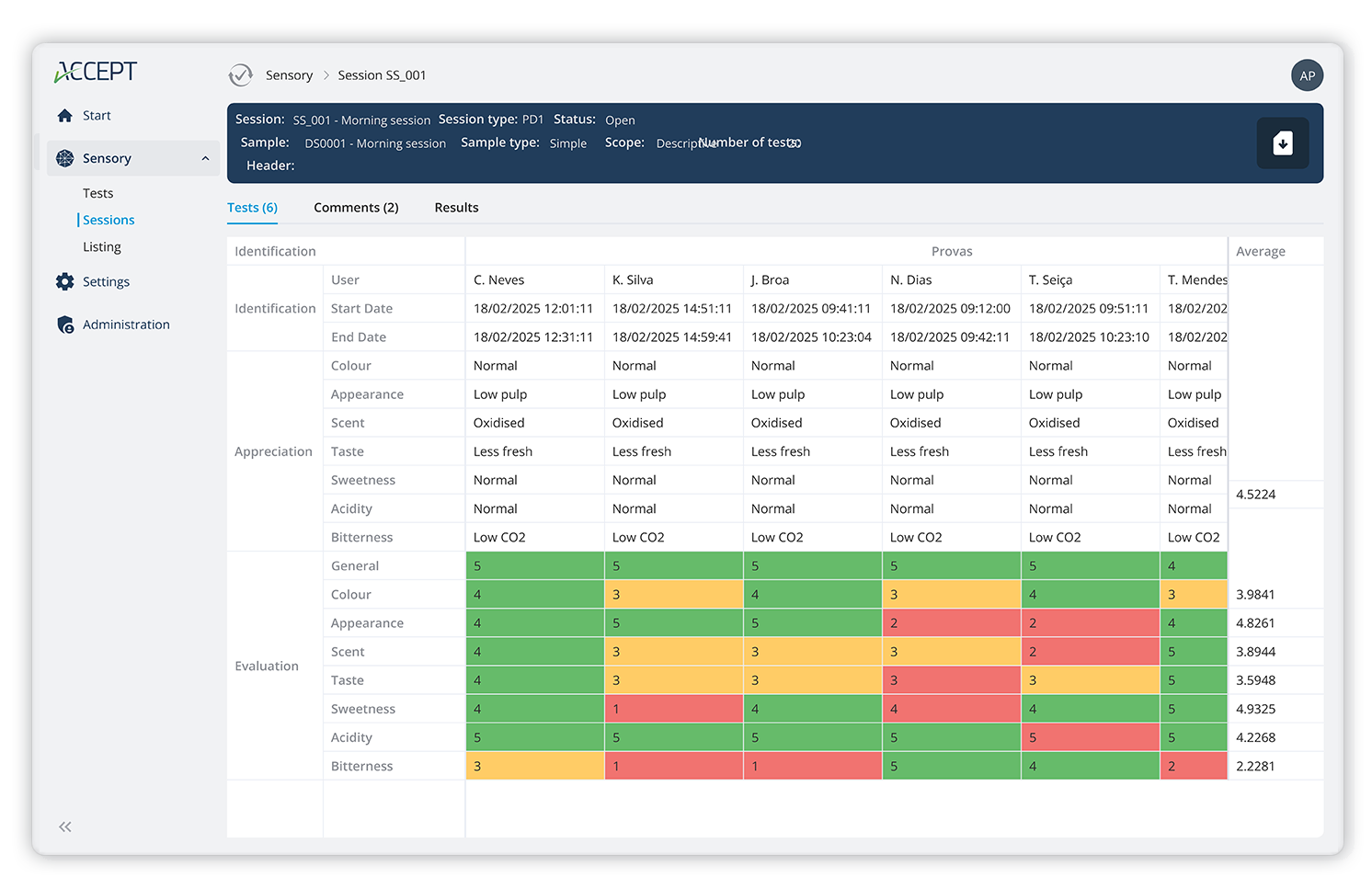
- Statistical indicators highlighting trends, preferences, and deviations.
- Clear comparisons between products, attributes, panels, and testers, supporting quality and product development.
Key features
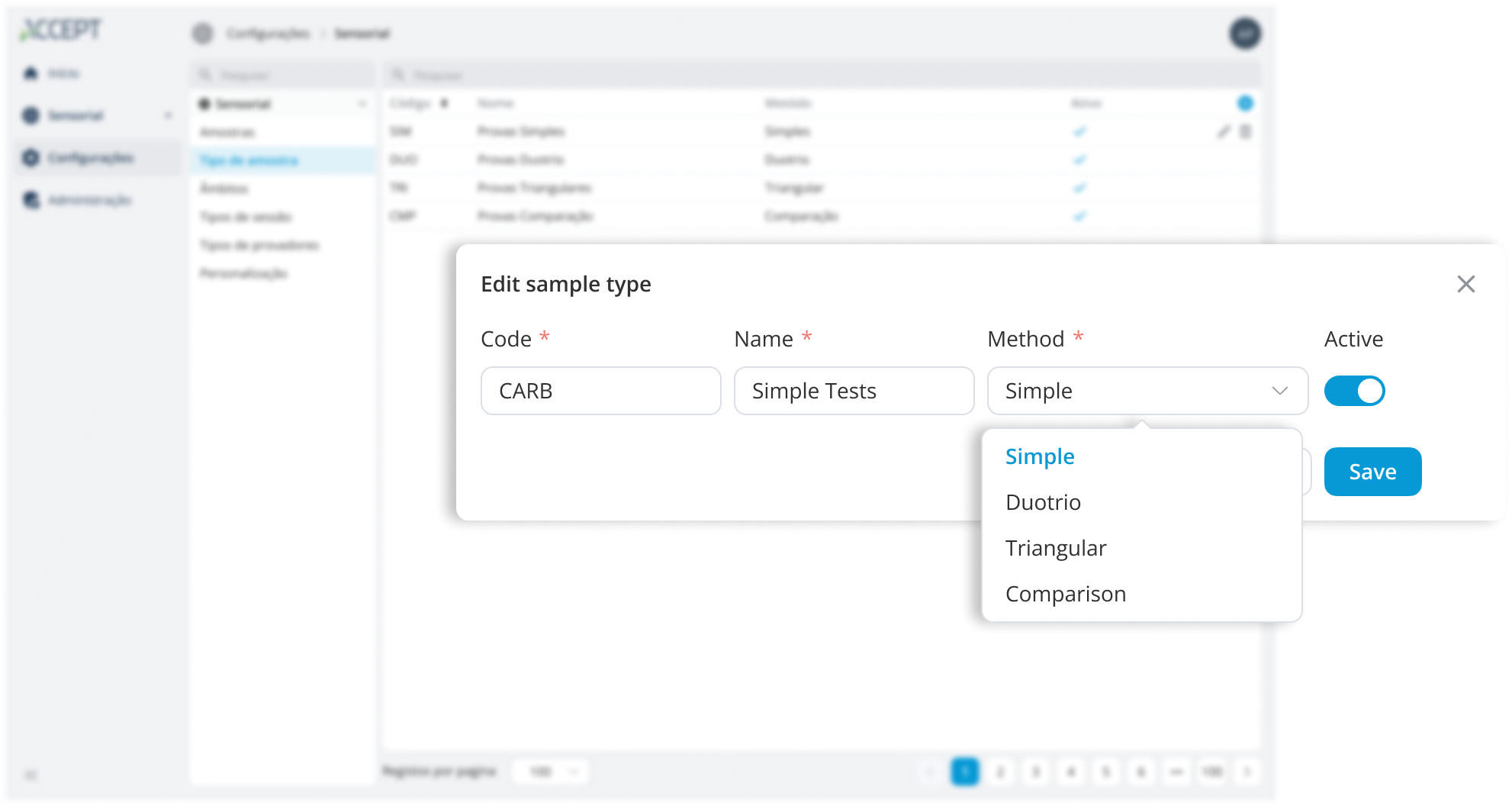
Wide range of tests
Perform descriptive, quantitative, triangle, duo‑trio, and comparative tests with full methodological flexibility.
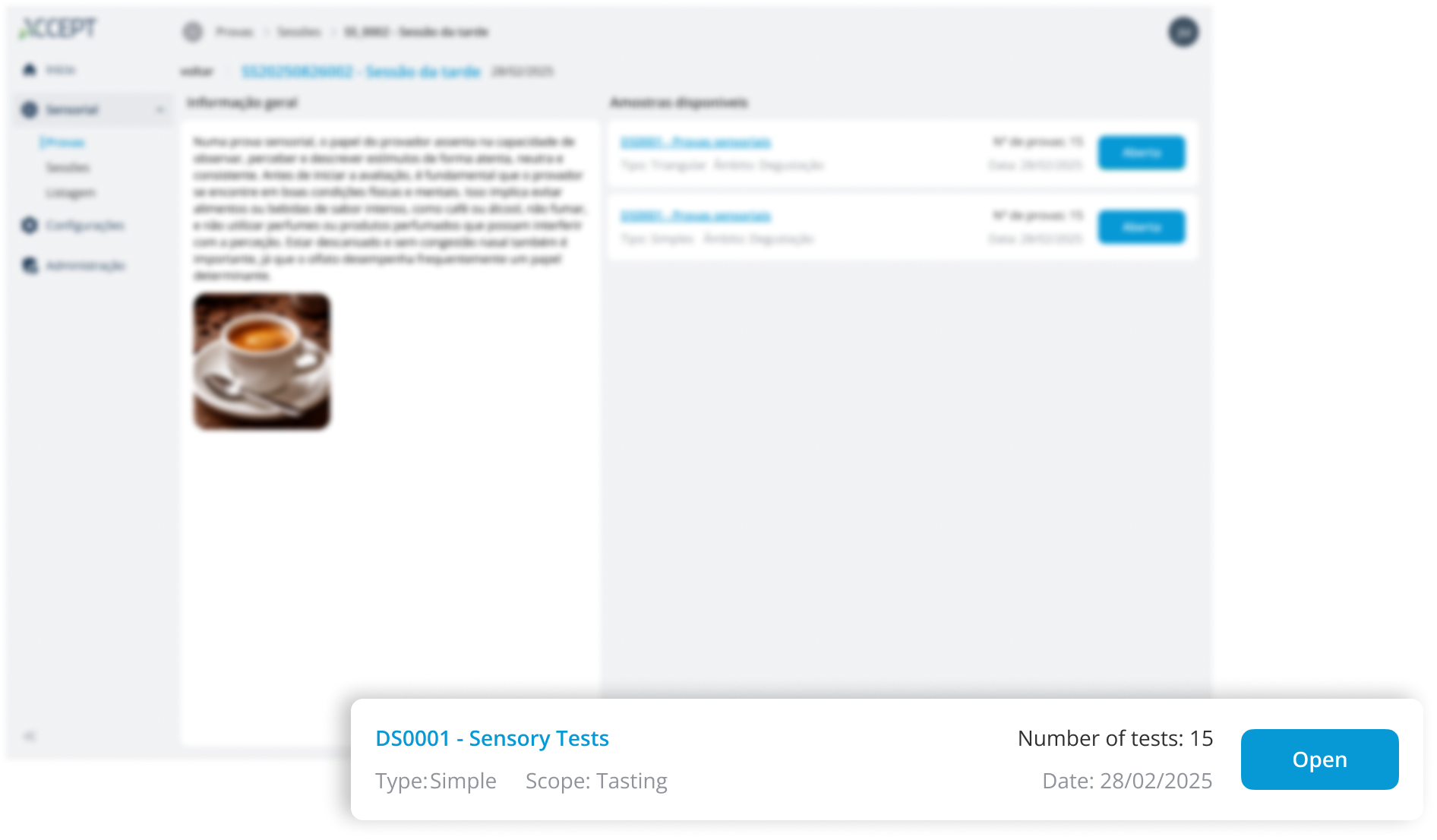
Tester registration portal
Each tester accesses their panel and records results simply, quickly, and in a standardized way.
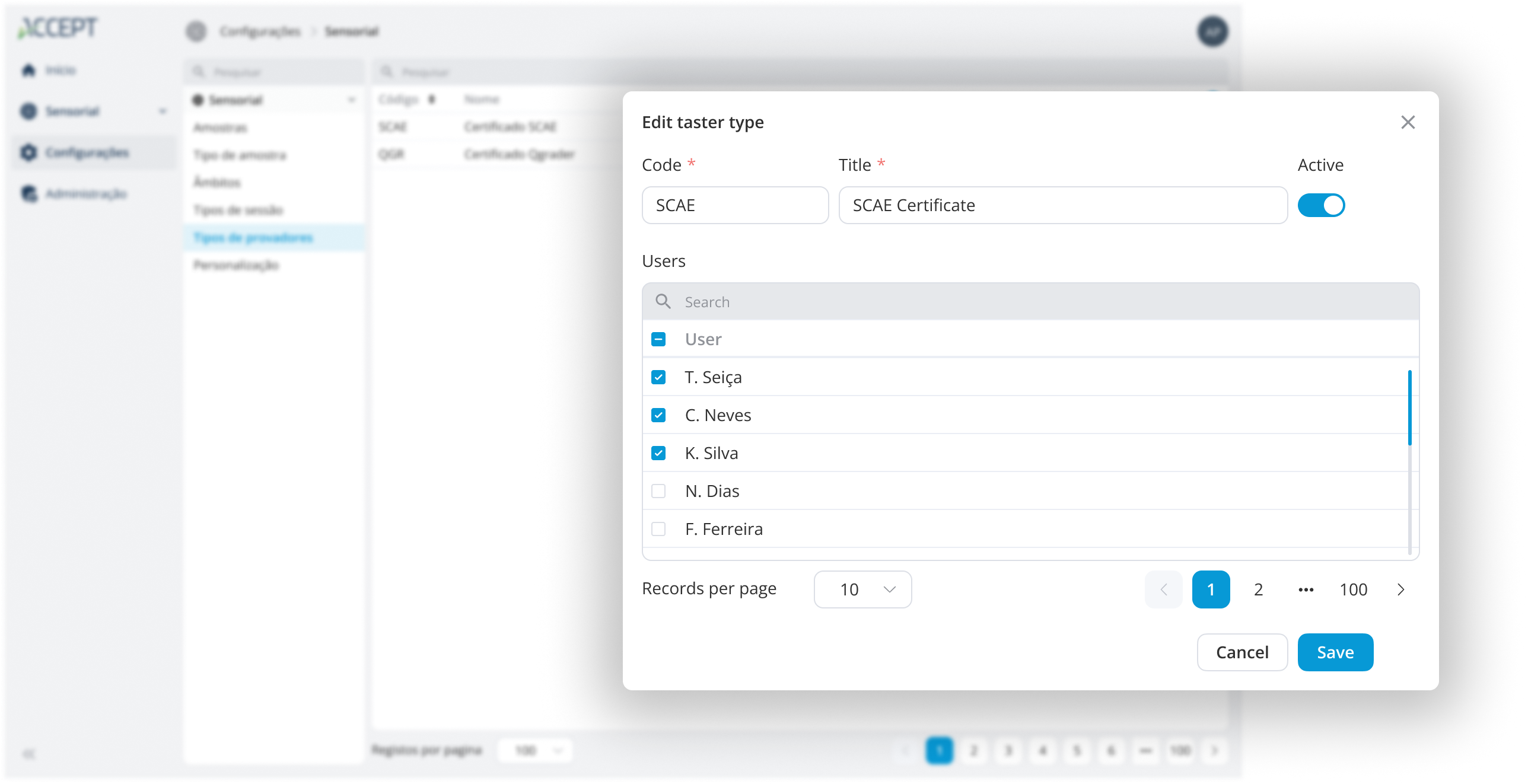
Tester management
Track history, consistency, and segmentation by attributes, product types, or panel types.
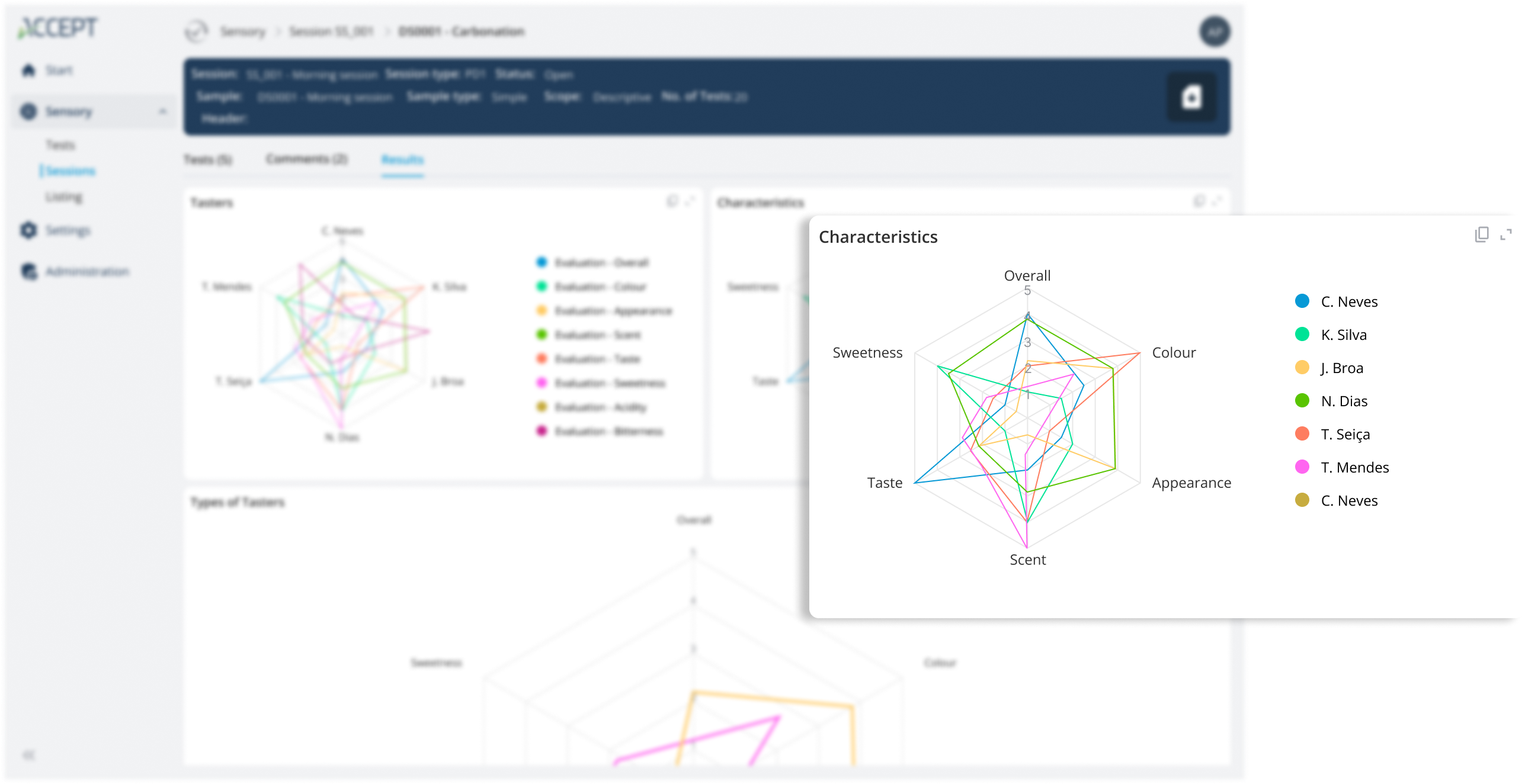
Statistical analysis of parameters
Comparative and longitudinal evaluation of results, with indicators that simplify interpretation and reveal meaningful insights.
Driving sensory quality and product development
With ACCEPT sensorial, teams can:
- Run and organise sensory tests faster, with less reliance on manual processes
- Maintain consistent results across testers, panels, and testing methods
- Easily compare results to spot preferences and detect deviations
- Strengthen alignment between quality, production, and R&D
- Speed up decisions on reformulation, validation, and sensory quality control
- Handle audits, complaints, and internal studies with confidence
Hear from those using the software in the field
Trusted by food industry companies, where sensory testing is key to maintaining quality and consistency.

“Among the various applications that Sumol Compal uses, I highlight ACCEPT SQC, Sensorial, and gmL because, overall, they allow us to ensure the collection, monitoring, and processing of results, as well as all quality information in digital format.”
Real cases with ACCEPT
See how ACCEPT sensorial streamlines inspections, minimises mistakes, simplifies audits, and enhances on‑floor decision-making
Sumol+Compal Case Study
Statistical Precision
ACCEPT System Implementation
Discover how Sumol Compal advanced across multiple Quality areas using the ACCEPT system!
Frequently Asked Questions about Sensory Analysis
What is sensory analysis software?
Sensory analysis software allows sensory tests to be planned, managed, and analysed in a structured way, centralising evaluation data and ensuring consistency in results. In the context of food quality, it makes it easier to compare products and make decisions based on reliable sensory data.
Why is sensory analysis important in food quality control?
Sensory analysis complements food quality control by evaluating characteristics such as flavour, texture, and aroma. Integrated into sensory analysis software, it allows perceptions to be transformed into objective data, reinforcing product consistency and quality.
How do you organise sensory analysis tests efficiently?
Organising sensory analysis tests involves defining protocols, selecting panels, and ensuring structured data collection. With the support of sensory analysis software, tests can be scheduled, participants managed, and evaluation criteria standardised, reducing errors and variability.
How do you manage sensory panels in the food industry?
Managing sensory panels requires control over participants, individual performance, and evaluation consistency. Sensory analysis software allows results to be tracked, taster reliability to be assessed, and collected data to be compared consistently over time.
How do you analyse sensory test results with greater accuracy?
Sensory result analysis should be based on structured and comparable data. Sensory analysis software allows uniform criteria to be applied, trends to be visualised, and differences between products to be identified, supporting decisions in food quality control.
How do you ensure consistency in sensory analysis data?
Consistency depends on test standardisation, panel training, and the way data is recorded. Sensory analysis software helps standardise processes, reduce variations, and ensure that results are reliable and comparable.
How do you digitalise the sensory analysis process in the food industry?
Digitalising sensory analysis involves replacing manual records with platforms that centralise data, tests, and evaluations. Sensory analysis software like ACCEPT sensorial allows the entire process to be managed in a single system, from scheduling through to results analysis.
Enhance the precision and reliability of your factory’s sensory evaluations
Schedule a demo and see how ACCEPT sensorial organises panels, results, and analyses in a single system.