
Food safety from process to final product
Ensure quality control in the food industry with safety, traceability, and full control of the production process, from start to final product.
Challenges in the food industry
The food industry operates under strict regulations and tight margins. Every deviation has a direct impact on safety, cost, and consumer trust. Among the most critical challenges are:
- Mandatory compliance with legal requirements and standards such as IFS, BRC, and HACCP
- Errors in manual records that compromise decisions and certifications
- Need for full traceability and rapid audits
- Overfilling that reduces margins and distorts actual costs
- Samples, analyses, and sensory evaluations that are difficult to coordinate
How does ACCEPT respond to these challenges?
ACCEPT brings together in a single ecosystem everything that the food industry demands in terms of rigor, traceability, and efficiency:
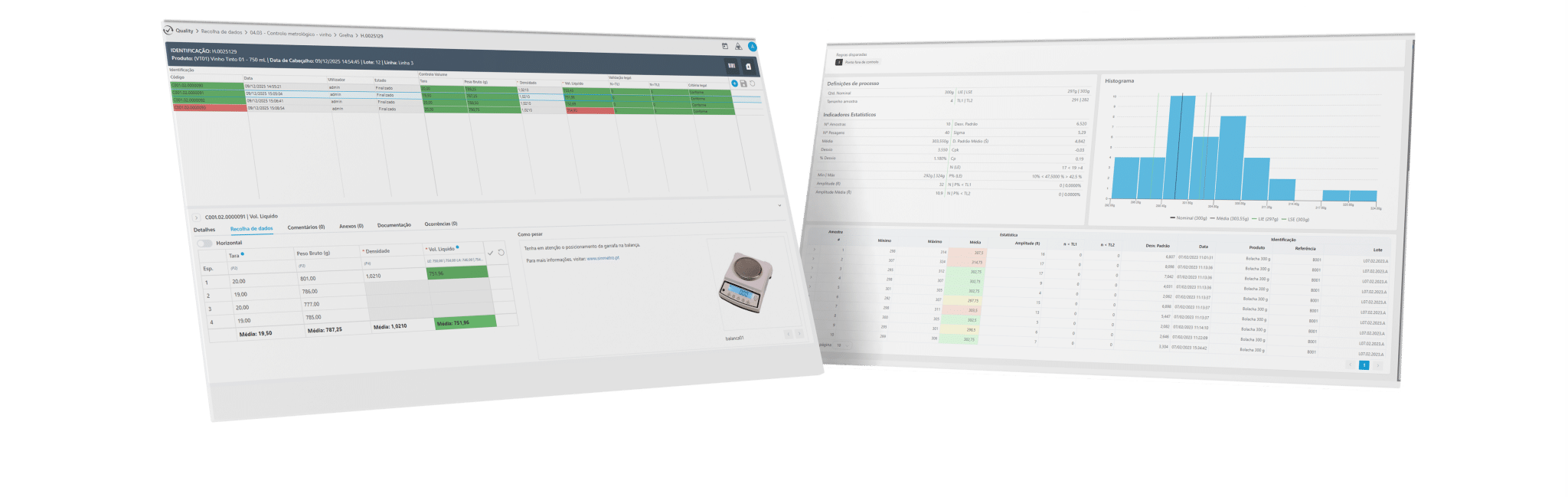
- Real-time SPC with control charts and reliable Cpk values
- Legal metrological control with overfill reduction
- Recording and management of deviations, incidents, and corrective actions
- Sample traceability with integrated label printing
- Validation of the reliability of measuring instruments
- Optimisation of consumption in cold rooms, filling processes, and compressed air systems.
Essential applications for the food industry
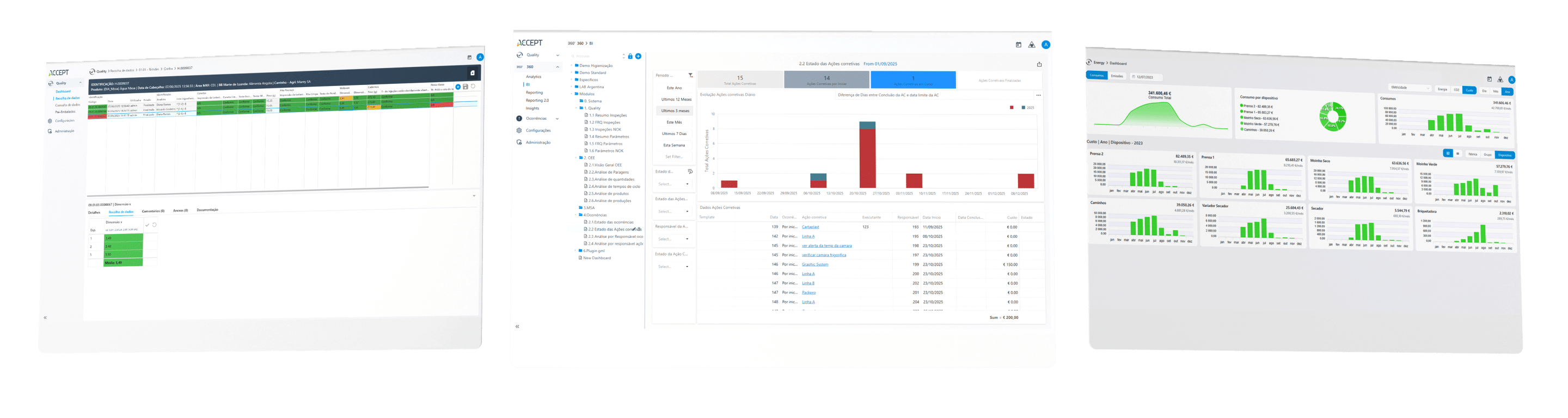
Each ACCEPT module enhances control, efficiency, and accuracy, always with integrated and accessible data.









Direct benefits for the food industry
- Guaranteed compliance without complex manual processes
- Less waste and higher margin per batch
- Fast audits with an organised and traceable history
- Enhanced food safety with centralised and reliable data
- Reduced energy consumption in critical areas (refrigeration, filling, compressed air)
- Recording and monitoring of events, essential for certifications and continuous improvement
Who is already using ACCEPT in the food industry




Alongside those driving the food industry forward
We believe that the best solutions are born in the field. That's why we work side-by-side with the food industry on every project we implement. Hear from those who are already experiencing ACCEPT.
“ACCEPT is a fundamental tool in the daily analysis of liquid volume and torque, enabling us to control our filling process, avoid overfills by line/product, and ensure compliance with the legal criteria for the metrological control of prepacked goods.”

“The ACCEPT System facilitates the implementation and maintenance of quality control, ensuring compliance with the Standard and Certifications. In our case, the system is greatly assisting with FSSC 22000 preparation through the integrity of records and the consistency of reports required by regulatory bodies, making the preparation for internal and external audits simpler, with centralised, organised, and accessible records and reports.”
Real cases with ACCEPT
Implementations that demonstrate the impact of digitalisation on quality and production. Discover the ACCEPT case studies in the food industry.
Nabeiro Group Case Study
ACCEPT Implementation
A partnership of over 20 years. Discover how the Nabeiro Group has transformed Quality throughout this journey with the ACCEPT system.
Grupo Carrinho Case Study
ACCEPT Implementation
Find out how the Carrinho Group digitised quality control in just 6 months with the implementation of the ACCEPT system.
Madre Fruta Case Study
Implementation of ACCEPT quality
Find out how Madre Fruta managed to reduce digitisation errors by 100% and gain 45 minutes daily to dedicate to Quality inspection!
FAQs on Quality Control in the Food Industry
How do you ensure quality control in the food industry?
Quality control in the food industry involves the continuous monitoring of production processes, control of critical parameters, and data recording throughout the entire production chain. Digitalising these processes enables greater accuracy, faster identification of deviations, and better decision-making.
What is food safety and how do you ensure compliance?
Food safety encompasses the set of practices that ensure food is safe for consumption. To guarantee compliance, it is essential to control processes, monitor critical points, and ensure traceability throughout the entire production chain.
What is food traceability and why is it important?
Food traceability allows a product to be tracked from its origin all the way to the end consumer. It is essential for ensuring food safety, facilitating audits, and responding quickly in the event of non-conformances or product recalls.
How do you improve food process control?
Food process control can be improved through real-time monitoring, the definition of control plans, and continuous analysis of production data. The use of digital tools enables greater consistency and a reduction in operational errors.
How do you ensure compliance with standards such as IFS, BRC, and HACCP in the food industry?
Compliance with standards such as IFS, BRC, and HACCP requires strict process control, monitoring of critical points, and continuous data recording. Food traceability and quality control in the food industry are essential for ensuring conformance, facilitating audits, and guaranteeing product safety.
How do you manage non-conformances in the food industry?
Managing non-conformities in the food industry involves identifying deviations, analysing root causes and implementing corrective actions to prevent recurrences. Effective quality control in the food industry requires structured recording of incidents and continuous monitoring of processes to ensure compliance and food safety.
How do you improve food industry quality control with a digital solution?
Using a digital solution allows data to be centralised, food traceability to be ensured, and food process control to be improved in real time. Platforms like ACCEPT help integrate quality, production, and information into a single system, making food industry quality management easier.
Do you want a safer, more efficient, and more profitable food operation?
Schedule a demo and see how ACCEPT can help you reduce waste and increase food safety.