
Less variation, more stable processes.
With process control in the plastics industry, reduce defects, control variability, and produce with less waste in every production cycle.
Challenges in the plastics industry
The plastics industry deals daily with processes that are sensitive to variations in temperature, pressure, and cycle time. Small deviations quickly translate into defects, waste, and increased costs. Among the main challenges are:
- Temperature and pressure variations that affect the quality of parts
- Inconsistent cycles and productivity losses
- Difficulty in identifying causes of defects such as filling faults, deformations or burrs
- High energy consumption in injection machines, extrusion and cooling systems

How ACCEPT responds to these challenges
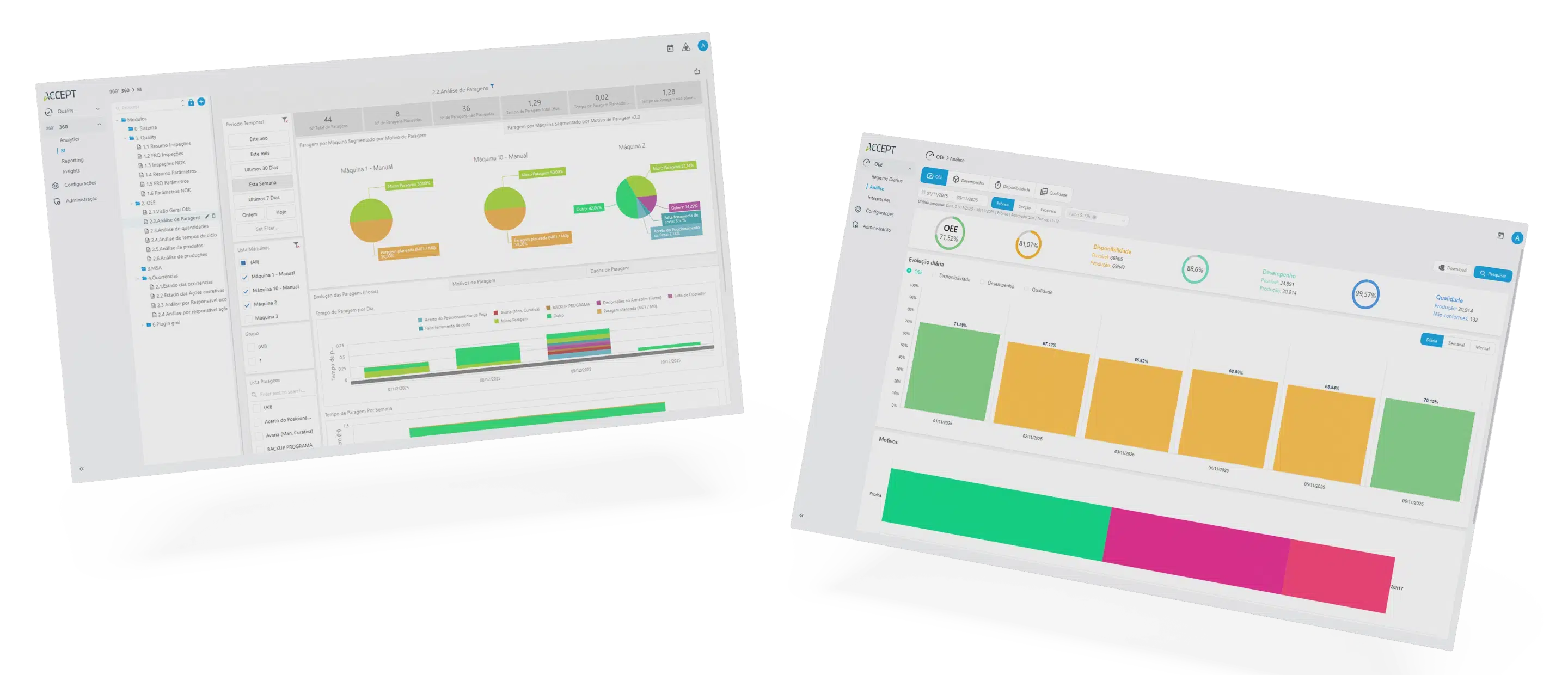
ACCEPT provides an integrated ecosystem to stabilise processes, reduce variation, and improve production efficiency.
-
Real-time SPC with alerts that anticipate deviations before nonconforming parts are produced.
-
IoT integration with injection molding and extrusion machines for automatic collection of process data.
-
Analysis of cycles, waste, downtime, and actual machine performance.
-
Identification of consumption peaks in chillers, compressed air, and auxiliary systems.
-
Structured recording of defects and recurring events.
-
Validation of dimensional measurements under tight tolerances.
Essential applications for the plastics industry
Each ACCEPT application contributes to more stable, predictable, and efficient processes.










Direct benefits for the plastics industry
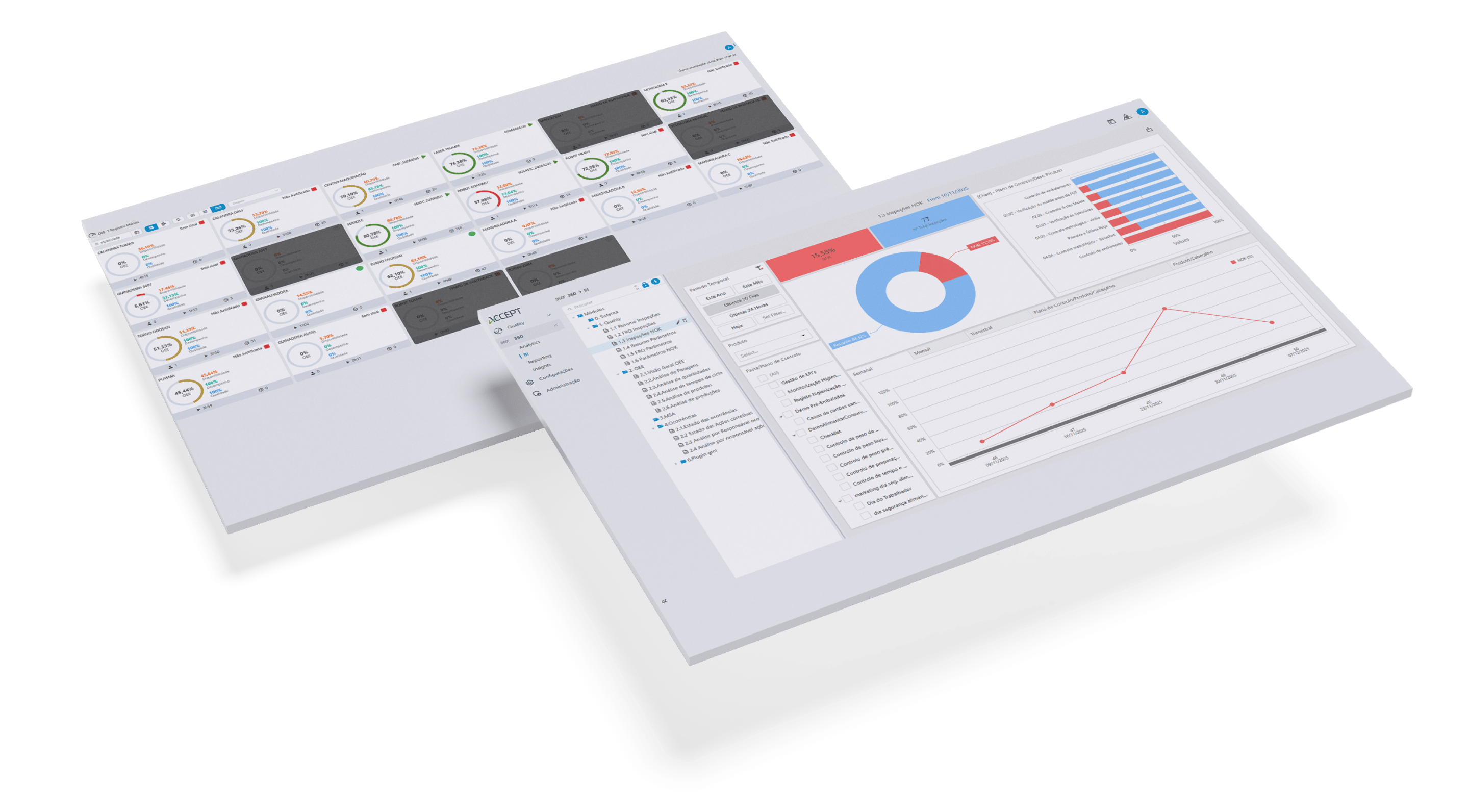
- Significant reduction in waste and scrap
- More stable processes and predictable cycles
- Reduced variation between operators and shifts
- Reduction of energy cost per part produced
- Complete traceability of the production process
- Faster response to incidents and recurring defects
Who is already using ACCEPT in the plastics industry









Alongside those driving the food industry forward
We believe that the best solutions are born in the field. That’s why we work side-by-side with the plastics industry on every project we implement. Hear from those who are already experiencing ACCEPT.

“A practical and efficient system. ACCEPT greatly simplifies our day-to-day work, making everything faster. In measurement, data collection is simple and effective.”

“Without any doubt, one of the most user-friendly solutions available for calibration management systems. A project that was very well supported, with a strong emphasis on the care and dedication of the team, always available and open-minded to client input.”
Real cases with ACCEPT
Implementations that deliver real gains in process stability, waste reduction,
and energy efficiency.
iPlastika Case Study
Statistical Precision
Discover how ACCEPT helped iPlastika increase confidence in the control of its processes.
FAQs on Process Control in the Plastics Industry
What is process control in the plastics industry?
Process control in the plastics industry involves monitoring and adjusting parameters such as temperature, pressure, and cycle time throughout production. It allows variability to be reduced, defects to be prevented, and consistency in the quality of produced parts to be ensured.
How do you reduce defects in plastic part production?
Reducing defects in plastic part production requires strict control of process parameters and continuous production monitoring. Early identification of deviations allows failures to be corrected before they impact large production volumes. Process and batch traceability is also essential for identifying the root cause of problems and continuously improving performance.
What are the most common defects in plastic injection?
The most common defects in plastic injection include bubbles, warping, short shots, and surface marks. These issues are generally associated with variations in process parameters and can be reduced with more rigorous production control.
How do you control critical parameters in the plastics industry?
Controlling critical parameters in the plastics industry involves monitoring variables such as temperature, pressure, and injection speed. Continuous monitoring of these parameters helps ensure process stability and reduce the occurrence of defects.
How do you reduce waste in plastic production?
Reducing waste in plastic production involves eliminating process variability and quickly detecting deviations. Effective process control allows scrap, rework, and excessive raw material consumption to be minimised.
How does OEE help improve production in the plastics industry?
OEE (Overall Equipment Effectiveness) is an indicator that measures the real performance of production, taking into account availability, performance, and quality. In the plastics industry, it helps identify losses, reduce downtime, minimise defects, and improve the overall efficiency of the production process. OEE monitoring enables more informed decisions and guides continuous improvement actions based on real data.
How do you control plastic production in real time?
Real-time production control allows critical parameters and production performance to be monitored as they occur. This visibility facilitates immediate decision-making and reduces the impact of deviations on the production process.
How do you improve process control in the plastics industry with a digital solution?
Using a digital solution allows production data to be centralised, critical parameters to be monitored, and deviations to be identified in real time. Solutions like ACCEPT help integrate process, quality, and production information into a single platform, making process control in the plastics industry easier and supporting faster, more informed decisions.
Do you want more stable injection processes and less waste per cycle?
Schedule a demo and see how ACCEPT helps reduce variation, improve efficiency, and control costs in the plastics industry.