
Quality as solid as your products
Improve production control in the metalworking industry with traceability, dimensional control, and real-time data to reduce deviations and increase efficiency.
Challenges in the metalworking industry
In the metalworking industry, tight tolerances, complex processes, and high cost and productivity pressures make even small deviations costly, resulting in rework, stoppages, and losses. The main challenges are:
- Strict control of tolerances and critical measurements
- Lack of real-time visibility into machine performance
- Unplanned downtime and challenges in predicting deviations
- High energy consumption in CNC machines, presses, and thermal systems
- Rework and scrap caused by variations not detected in time
How does ACCEPT respond to these challenges?
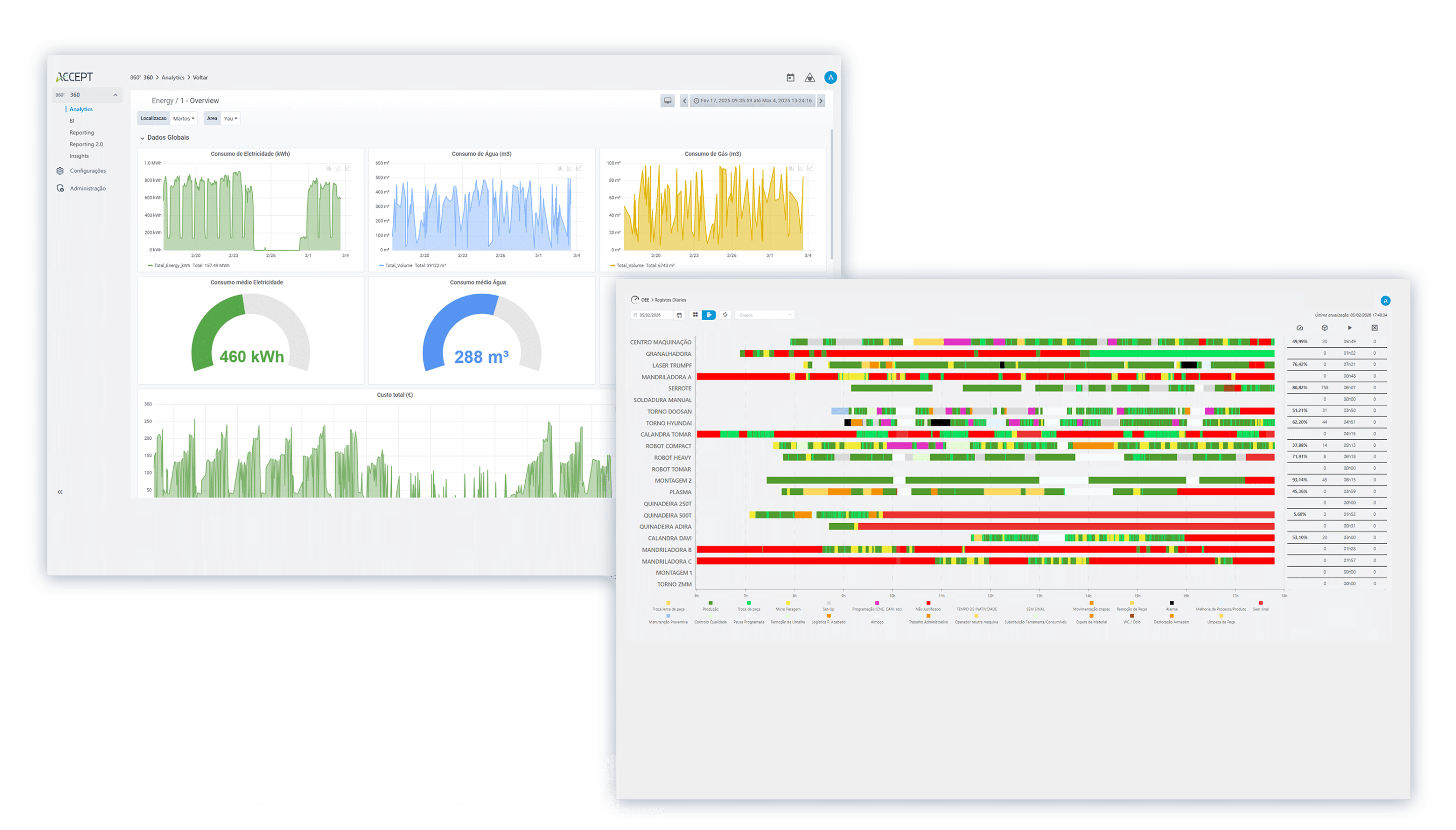
ACCEPT provides an integrated ecosystem to control quality, efficiency, and energy in an industrial environment
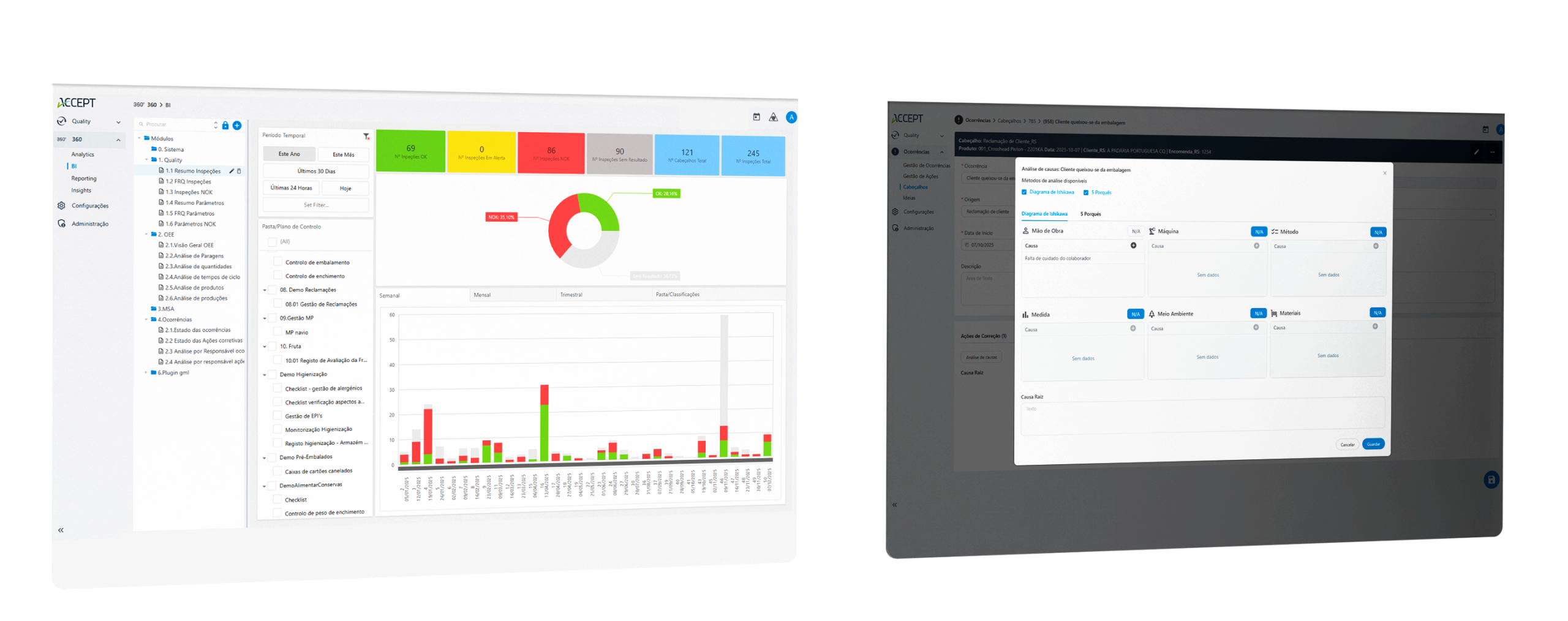
- Real-time SPC with control charts, alerts, and reliable Cpk indicators.
- Connect directly with measurement tools like CMMs, calipers, and comparators.
- Track productivity, minimise losses, and measure real machine performance.
- Detect energy waste and optimise usage.
- Organized tracking of non-conformities and incidents.
- Ensure reliability of instruments and operators in critical measurements.
Core solutions for metalworking operations
Each ACCEPT module enhances control, efficiency, and accuracy, always with integrated and accessible data.










Key benefits for the metalworking sector
- Reduction of rework, scrap, and variation between shifts
- Achieve more consistent processes and better Cpks
- Improved predictability of production output
- Lower energy cost per produced part
- Centralised data for global customer audits
- Quicker, organized handling of non-conformities
Who already uses ACCEPT in the metalworking industry





Alongside those driving the food industry forward
We believe that the best solutions are born in the field. That’s why we work hand in hand with the metalworking industry on every implemented project. Hear from those who are already experiencing ACCEPT.

“Based on the market research conducted and considering what our organization needed, ACCEPT was the most suitable and versatile software. It was time to have a more professional, capable solution with support available whenever needed.”

“ACCEPT has been essential, not only for the ease with which data can be obtained, but above all for the enthusiasm I see people bring to the process . That is, without a doubt, what I value most.”
Real cases with ACCEPT
See implementations that deliver tangible improvements in quality, efficiency, and cost savings.


FAQs on Production Control in the Metalworking Industry
What is production control in the metalworking industry?
Production control in the metalworking industry involves monitoring and managing operations throughout the production process, ensuring that parts meet quality requirements, deadlines, and technical specifications. It allows deviations to be reduced, efficiency to be improved, and production consistency to be ensured.
How do you reduce deviations in metalworking production?
Reducing deviations in metalworking production requires strict process control and continuous operations monitoring. Early identification of variations allows problems to be corrected before they affect part quality and delivery deadlines.
Why is dimensional control important in the metalworking industry?
Dimensional control in the metalworking industry is essential for ensuring that parts meet tolerances and technical specifications. Small deviations can compromise the final performance of the product, making this control critical throughout the entire production process.
How do you ensure traceability in the metalworking industry?
Traceability in the metalworking industry allows the production history of each part to be tracked, from raw materials through to the final product. This makes it easier to identify the causes of incidents, ensures conformance, and improves overall production control.
How do you improve efficiency in metalworking production
Improving efficiency in metalworking production involves reducing downtime, minimising rework, and ensuring process stability. Production control and data analysis allow improvement opportunities to be identified and operational performance to be optimised.
How do you control processes in the metalworking industry?
Process control in the metalworking industry involves monitoring critical variables throughout production and ensuring they remain within defined parameters. This control allows variability to be reduced, errors to be prevented, and consistency in produced parts to be ensured.
How do you improve production control in the metalworking industry with a digital solution?
Using a digital solution allows production, quality, and measurement data to be centralised in a single platform. Solutions like ACCEPT help improve production control in the metalworking industry by enabling deviations to be identified, indicators to be tracked, and decisions to be supported based on real-time data.
Looking for consistent parts, reduced rework, and higher machine efficiency?
Schedule a demo and see how ACCEPT helps control quality, productivity, and energy in the metalworking industry